
The Sound of Ancient War: Why Seamus Heaney's Beowulf Still Hits
The Sound of Ancient War: Why Seamus Heaney's Beowulf Still Hits
Apr 18, 2026
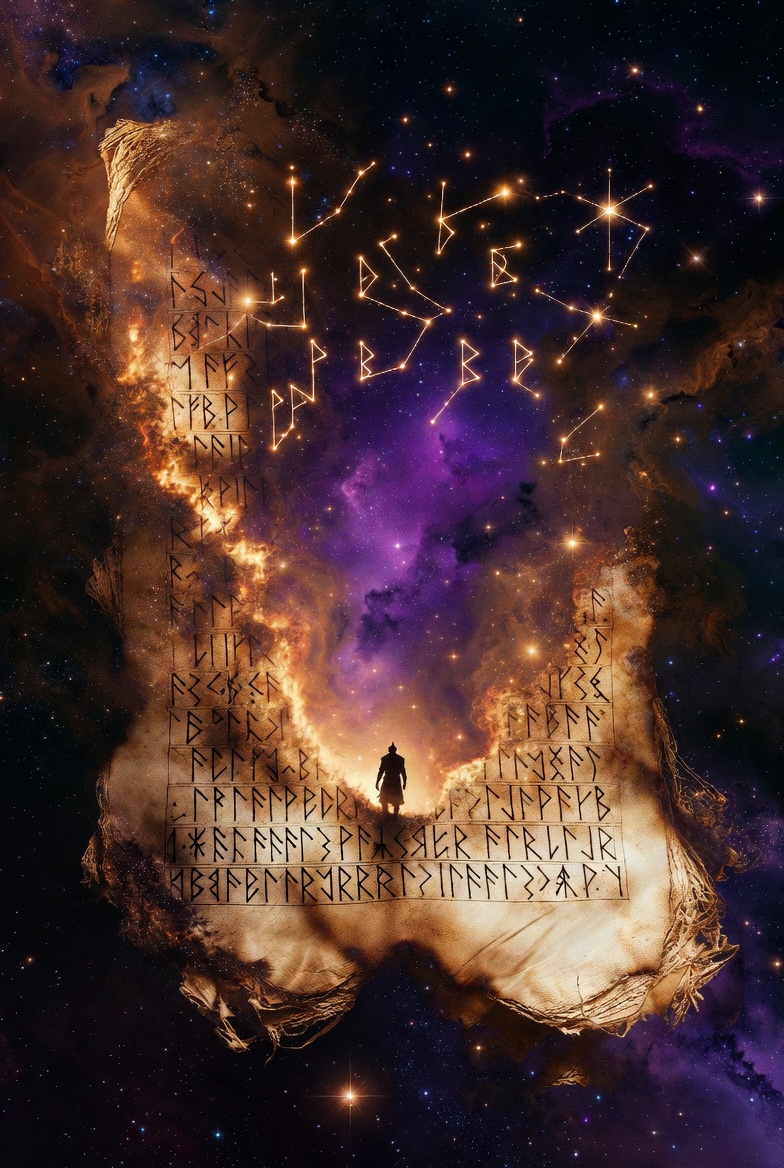
A Catholic farmer's son from a colonized land translated the crown jewel of English literature. He made it his own. And he made it unforgettable.
You can tap your toe to it.
That was the first thing I noticed. Reading Seamus Heaney's translation of Beowulf, I found myself nodding to the rhythm like it was a song. Not the iambic pentameter I was trained on in school — this was different. Harder. More martial.
Four beats to a line. Alliteration crashing like waves. Words that feel like they were forged, not written.
That was the first thing I noticed. Reading Seamus Heaney's translation of Beowulf, I found myself nodding to the rhythm like it was a song. Not the iambic pentameter I was trained on in school — this was different. Harder. More martial.
Four beats to a line. Alliteration crashing like waves. Words that feel like they were forged, not written.
“The fortunes of war favored Hrothgar.”
“…to survey the stone and the steep cliffs.”
“…hale and hardy, held the moors.”
There’s a downbeat you can feel in your chest. A pulse. This isn’t poetry you analyze — it’s poetry you hear.
And the words themselves? Brutal. Ancient-sounding. Thole. Bawn. Wergild. They have weight. Texture. They taste like iron and peat.
That’s what hooked me. That’s what made Heaney’s Beowulf one of the primary inspirations for The Star Love Experience: Lyra and the AI War.
But here’s what I didn’t know when I first picked it up: the man behind this translation was doing something far more radical than bringing an old poem to life.
He was settling a score.
The Farmer’s Son From the Wrong Side of the Divide
Seamus Heaney was born in 1939 in County Derry, Northern Ireland, the eldest of nine children in a Catholic farming family. His father worked with a horse-plough. His childhood was all mud and cattle and dialect words his Protestant neighbors might not know.
In Northern Ireland, this mattered. Catholics were second-class citizens in a land ruled by Britain. The Irish language was suppressed. The Catholic culture was treated as backward. And the English language itself — the language Heaney would eventually master — was the tongue of the colonizer.
Heaney described himself as someone who “emerged from a hidden, a buried life and entered the realm of education.”
That education came at a cost. To succeed in the English-speaking world, he had to learn to write in the language of the people who had dominated his people for centuries. Latin at school. Anglo-Saxon at university. The literature of empire.
Then came the Troubles.
From the late 1960s through 1998, Northern Ireland was a war zone. Protestant and Catholic. Loyalist and Republican. Bombs in pubs. Soldiers in the streets. Heaney’s neighbors being shot, his friends being arrested, his entire community under siege.
“Things aren’t too bad in our part of the town,” he would tell people who asked.
Things were, in fact, quite bad.
He wrote through all of it. Poems about bog bodies — ancient sacrificial victims preserved in peat, their faces still visible after centuries. Poems about the anvil brains of those who hated him. Poems trying to find some language adequate to horror.
And then, in 1999, he published his Beowulf.
Stealing the Crown Jewels
Beowulf is the oldest surviving long poem in English. It’s the literary origin point. The Genesis. For centuries it has been treated as a treasure of English culture — taught in English schools, studied by English scholars, claimed as the foundation of the English literary tradition.
But Seamus Heaney — Irish, Catholic, from a colonized land — decided he was going to translate it. And he wasn’t going to pretend he was English to do it.
Heaney seeded his translation with Hiberno-English, words from his Ulster dialect that would sound foreign to English ears:
Thole
To suffer, to endure. A word his aunts used that came directly from Old English þolian, preserved in Irish speech for a thousand years while the English forgot it.
Bawn
A fortified farmhouse. An Irish word with no English equivalent, carrying centuries of siege and survival in two syllables.
Scholars were furious. “Students will think the original had Gaelic in it!” they complained.
Heaney’s response, buried in his introduction, was devastating. He talked about how he finally felt he had “the right to translate” when he realized that the Old English word þolian had survived in his aunt’s speech as “thole.”
“I felt right at home,” he wrote.
Translation for Heaney wasn’t about erasing himself to serve the original. It was about finding where his voice and the ancient voice already overlapped. Where his people’s language had preserved what the colonizers had forgotten. He didn’t steal Beowulf from the English. He reclaimed what was always partly his.
The Rhythm You Can Tap Your Toe To
Old English poetry doesn’t work like modern poetry. No rhyme schemes. No iambic pentameter. Instead it runs on alliteration and stress.
Each line has four strong beats, split in the middle by a pause called a caesura. The sounds before and after that pause connect through alliteration — the same consonant starting multiple stressed words. Heaney preserved this in what scholars call a flexible tetrameter: four beats, loosely held, alliteration threading through:
“So. The Spear-Danes in days gone by…”
“…the survey of that stone and the steep cliffs…”
“…he was the most gracious and fair-minded…”
Read it out loud. You’ll feel the pulse. One-two-THREE-four. One-two-THREE-four. This is music for marching. For reciting around a fire. For keeping time while armies walked to war. It’s also why the poem lodges in your memory — rhythm makes you feel before your mind can analyze.
Words Like Iron: Kennings and Compound Metaphors
The Anglo-Saxons didn’t just say “sea” or “body” or “sword.” They created kennings — compound metaphors that compressed entire images into two words:
Whale-road
The sea
Bone-house
The body
Swan-road
The sea (from another angle)
Iron-shower
A volley of arrows
Battle-sweat
Blood
Heaney kept these. He understood that “bone-house” isn’t just poetic — it’s accurate. Your body IS a house made of bone. The metaphor teaches you to see something familiar as if for the first time.
This compression is a masterclass for any writer. You don’t need a paragraph to paint an image. Sometimes two words, hyphenated, carry more weight than a sentence. What’s your whale-road? What compound metaphor can you invent that makes someone see a familiar thing freshly?
Why Read This Ancient Story Now?
A thousand years old. About Scandinavian warriors. Written in a dead language. Why does anyone need this?
Because it’s not really about warriors and monsters. It’s about the questions that never stop mattering.
What do we owe each other?
Beowulf crosses the sea to help a neighboring kingdom. He has no obligation. He goes because their pain became his problem. In an age of algorithm-curated isolation, this is radical.
What does courage cost?
Beowulf wins his battles, but winning is not free. By the end, the cost is everything. The poem refuses the fantasy that heroism comes without a price tag.
How do we face the darkness that comes for everyone?
Beowulf doesn’t flinch from mortality. The hero grows old. The hero dies. And the poem asks: what remains? The only thing that remains is the story told about you after you’re gone.
These are not academic questions. They’re your questions. How will you be remembered? What are you willing to sacrifice? Who are you when the monster shows up? The poem has survived a thousand years because every generation recognizes itself in it.
What Heaney Taught Me About Voice
Heaney didn’t try to sound like an Anglo-Saxon scop. He didn’t try to sound like an English scholar. He sounded like Seamus Heaney translating an Anglo-Saxon scop — Irish vowels, Ulster dialect, Catholic farmer’s son wrestling with the crown jewel of English literature.
That’s voice. Not an imitation. Not a disguise. Voice is identity filtered through language.
You don’t have to abandon where you come from to honor your sources. Your particular way of speaking IS your contribution.
When I sat down to write The Star Love Experience, I kept Heaney’s Beowulf on my desk. Not to copy it — you can’t copy it. But to remind myself:
- Rhythm matters.
- Sound matters.
- The words should taste like something.
- You don’t have to pretend to be someone else to tell an ancient kind of story.
The Challenge
Try This Tonight
Get Heaney’s Beowulf. The bilingual edition if you can — Old English on one side, his translation on the other.
Read fifty lines out loud.
Feel the four-beat pulse. Let the alliteration wash over you. Notice how the kennings land.
Don’t just read it. Hear it.
Then ask yourself: What story am I trying to tell? And what is MY voice for telling it?
That question is the beginning of everything.
Seamus Heaney received the Nobel Prize in Literature in 1995. His Beowulf translation became an unexpected bestseller — a thousand-year-old poem topping the charts. He died in 2013. His last message to his wife, sent minutes before his death, was in Latin:
Noli timere.
Don’t be afraid.
For the Builder in You
High performance
The Recovery Stack That Keeps You Sharp
Deep reading. Late nights. The sustained focus that serious creative work demands. Drug-free phototherapy patches we personally use to recover fast and stay sharp.
Read the recovery stack →Build your platform
Stop Paying for Tools That Should Be Free
The all-in-one platform we use to build sites, capture leads, and run our online business. Free to start, no credit card required.
See why we switched →













What Ancient Work Changed How You See?
A book, a poem, a piece of music that hit differently — that made you realize something timeless was speaking directly to you. Drop it in the comments. This community is built for exactly these conversations.